
T:0 builds your P&L, balance sheet, and cash flow statement from our proprietary ledger, so every line reflects your business as of the last hour, not the last month. Every figure drills to the transaction behind it.
Request a Demo: Features
T:0 builds your statements from the ledger that records every transaction, so they are complete whenever you open them:
Snapshot of your businesses revenue, COGS, and operating expenses in the structure your business runs on and updated hourly. Your P&L is built around a custom chart of accounts which is created when you join T:0

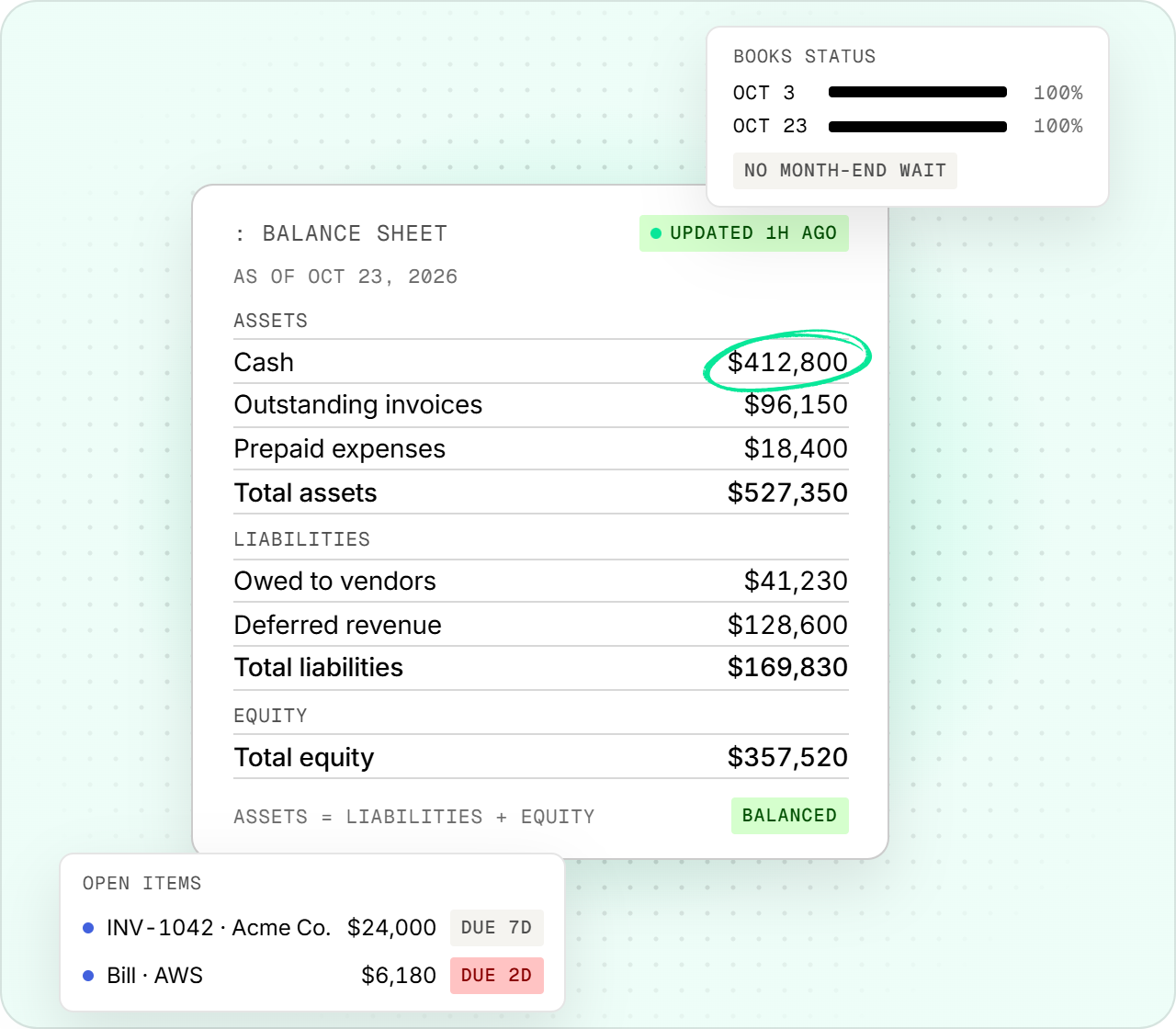
Assets, liabilities, and equity, updated hourly. Your cash position, outstanding invoices, deferred revenue, and what you owe vendors, all current and all in one place. Open it on the 3rd or the 23rd and the picture is just as complete.
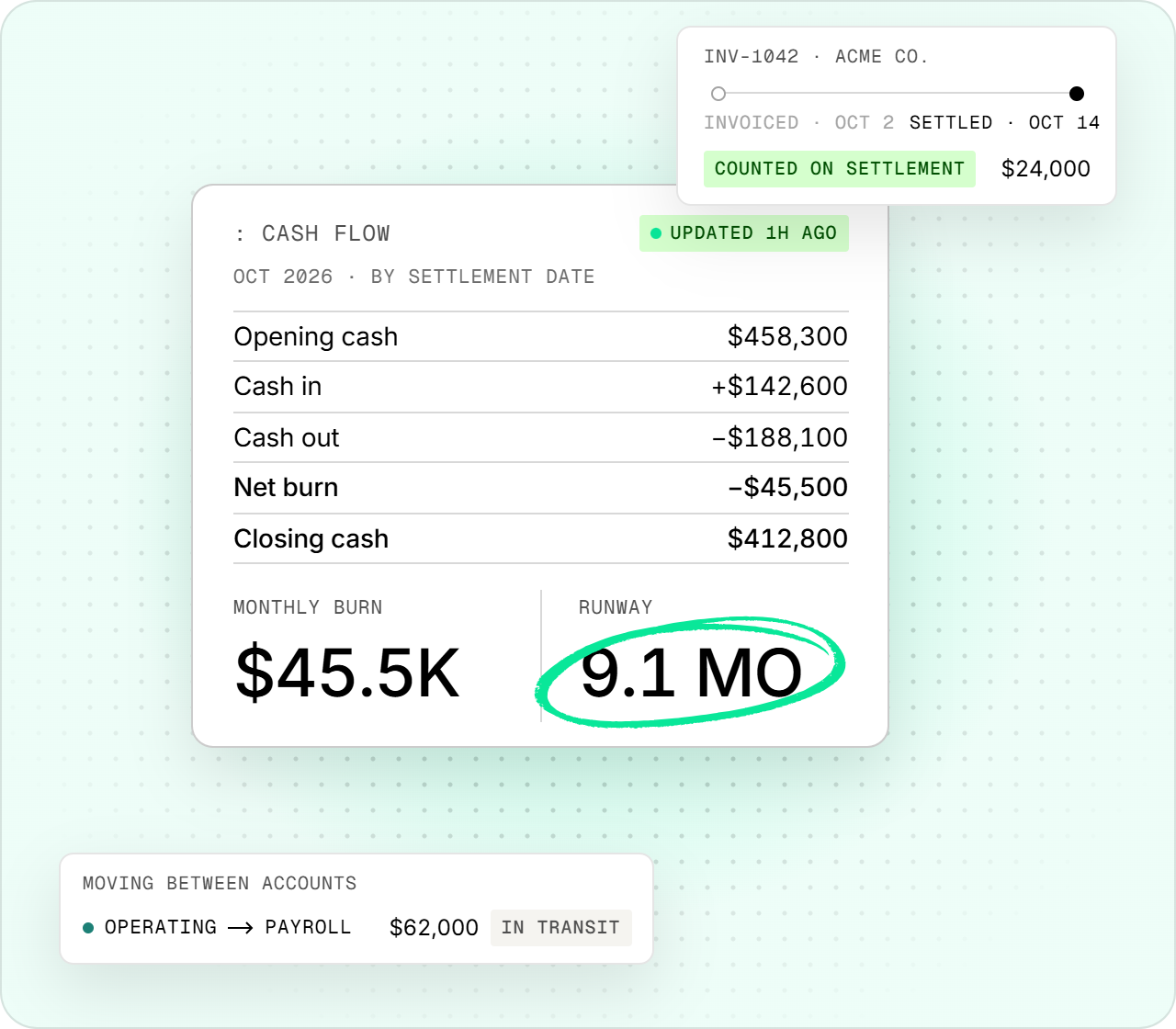
Cash in, cash out, and everything still moving between accounts. T:0 builds the statement from actual settlements rather than invoice dates, so burn and runway are calculated on money that really moved. For a company measuring its life in months, that distinction is the whole game.
: How T:0 is different
Click any figure and follow it down: total, category, vendor, the exact transaction, and the invoice or receipt behind it. The evidence is part of the report, not a separate request to your bookkeeper.
Every entry on every statement was posted by a rule you can open and read. Same event in, same entry out, every time. When you want to know why something was categorized the way it was, the answer is in the system rather than in someone’s head.
Your statements update hourly as transactions arrive. There is no export, no rebuild, and no version of the P&L sitting in someone’s downloads folder going quietly out of date.
Your chart of accounts is generated from a profile of your business, not applied from a generic template. Revenue is split the way you earn it and costs are split the way you spend, so gross margin and burn mean something from the first month.
: FAq
T:0 builds your statements from the ledger that records every transaction, so they are complete whenever you open them:
Financial reporting software, sometimes called financial statement reporting software, produces a company’s core financial statements (the profit and loss statement, balance sheet, and cash flow statement) from its underlying accounting records. T:0 generates all three from a live ledger, so they reflect the current state of the business.rather than what your business looked like last month.
The right tool for a venture-backed startup needs three things most general accounting software doesn’t offer: accrual-basis books from day one, statements that stay current between closes, and the ability to trace any number back to the transaction behind it. T:0 was built for seed to Series A companies in SaaS, AI, fintech, and developer tools, and it produces board-ready statements without a month-end assembly project.
T:0 starts at $199 per month, which includes all three financial statements, your custom chart of accounts, and the reports and dashboards built on top of them. Managed plans that add a dedicated CPA start at $599 per month. See pricing for full details.
T:0 connects to your bank accounts, corporate cards, payroll, billing, and payment processors, including Stripe, Ramp, Brex, Mercury, Deel, and Gusto, with 12,000+ integrations in total. Transactions flow in automatically and post to the ledger as they arrive, so every connected account is consolidated into one set of statements.
A bookkeeper assembles statements after the fact, usually two to three weeks after month-end, and a spreadsheet is a copy that goes stale the moment it’s made. Automated financial reporting software derives statements directly from transaction data, so there is no assembly step and no second version to reconcile. T:0 handles the daily work on its own, and managed plans add a CPA who reviews exceptions and certifies the close.
No. The platform keeps your books on its own, and you can read your statements, compare periods, and export to Excel or PDF without any accounting background. If you want a professional signature on your close, managed plans add a dedicated CPA who certifies your books each month.
Yes. T:0 is a complete general ledger, not a reporting layer built on top of one, so it replaces your existing accounting software rather than syncing with it. When you connect your accounts, T:0 imports your transaction history, so prior periods stay intact and you are not restarting your books from zero
Hourly. Transactions from your bank, cards, payroll, billing, and payment accounts are categorized and reconciled as they arrive, so your statements are never more than an hour behind the business.
Yes, in two directions. Any figure can be expanded to show the category, vendor, individual transaction, and the invoice or receipt behind it. Every object also traces back to the accounting rule that produced it, and all of those rules are visible in T:0, so you can see not just what was recorded but why it was recorded that way. The full audit trail is kept as data rather than reconstructed after the fact.
Yes. T:0’s software and accounting rules are built to follow GAAP guidelines, and the platform keeps accrual-basis books so revenue, expenses, and balances land in the period they belong to. Before you file your taxes, we recommend having a CPA review your financials, a service we offer on managed plans.
Yes. T:0 supports both. Most venture-backed companies move to accrual-basis books before their first priced round, because investors and auditors expect revenue recognized when it’s earned rather than when cash arrives.
: Explore the platform
From the first transaction to the board deck.

An accounting engine built around your business, with a chart of accounts generated from how you actually operate.

Transactions categorized, reconciled, and matched as they land, every day, across every account.
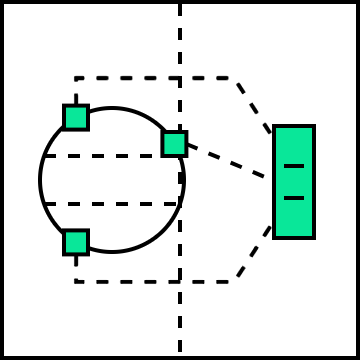
Every subsidiary and currency in one ledger, with intercompany eliminated automatically and a consolidated close in days.

ASC 606 applied as a rule, with deferred revenue schedules that reconcile to the contracts behind them.


