
T:0’s ledger starts with a profile of how your company actually operates, then generates a custom chart of accounts and categorization rules to match. Every entry records the event that caused it, so every number keeps its story and nothing has to be reconstructed later.
Request a Demo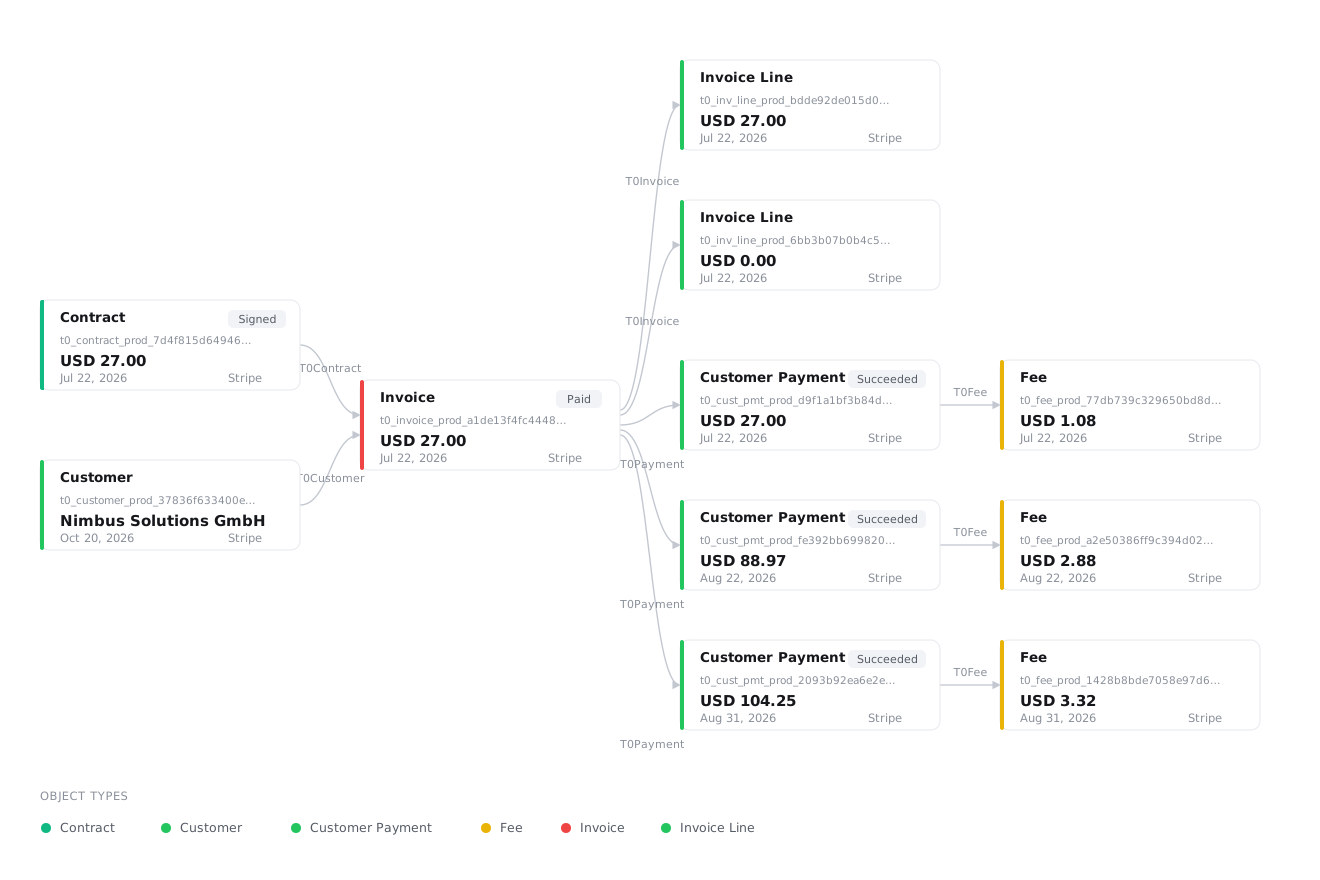
: Features
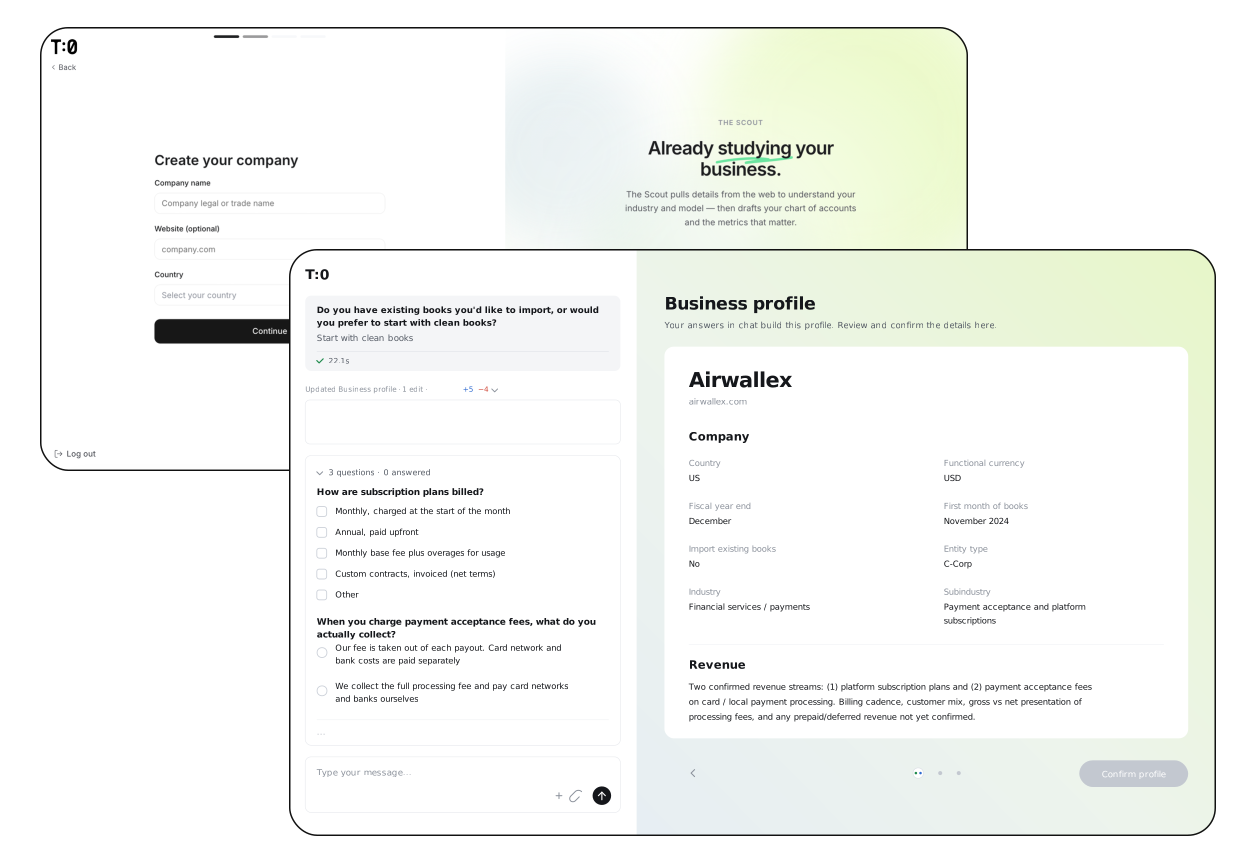
While onboarding to T:0, our AI pulls details from the web to understand your industry and revenue model, then asks about the things it cannot infer: how you bill, what you actually collect, whether you are importing books or starting clean. Your answers become a business profile you confirm, and the ledger is built from it.
Bank, cards, payroll, billing, and payments reconcile against each other rather than each in its own silo. A Stripe payout, the fees deducted from it, and the deposit that lands three days later are one connected story instead of three unmatched lines.
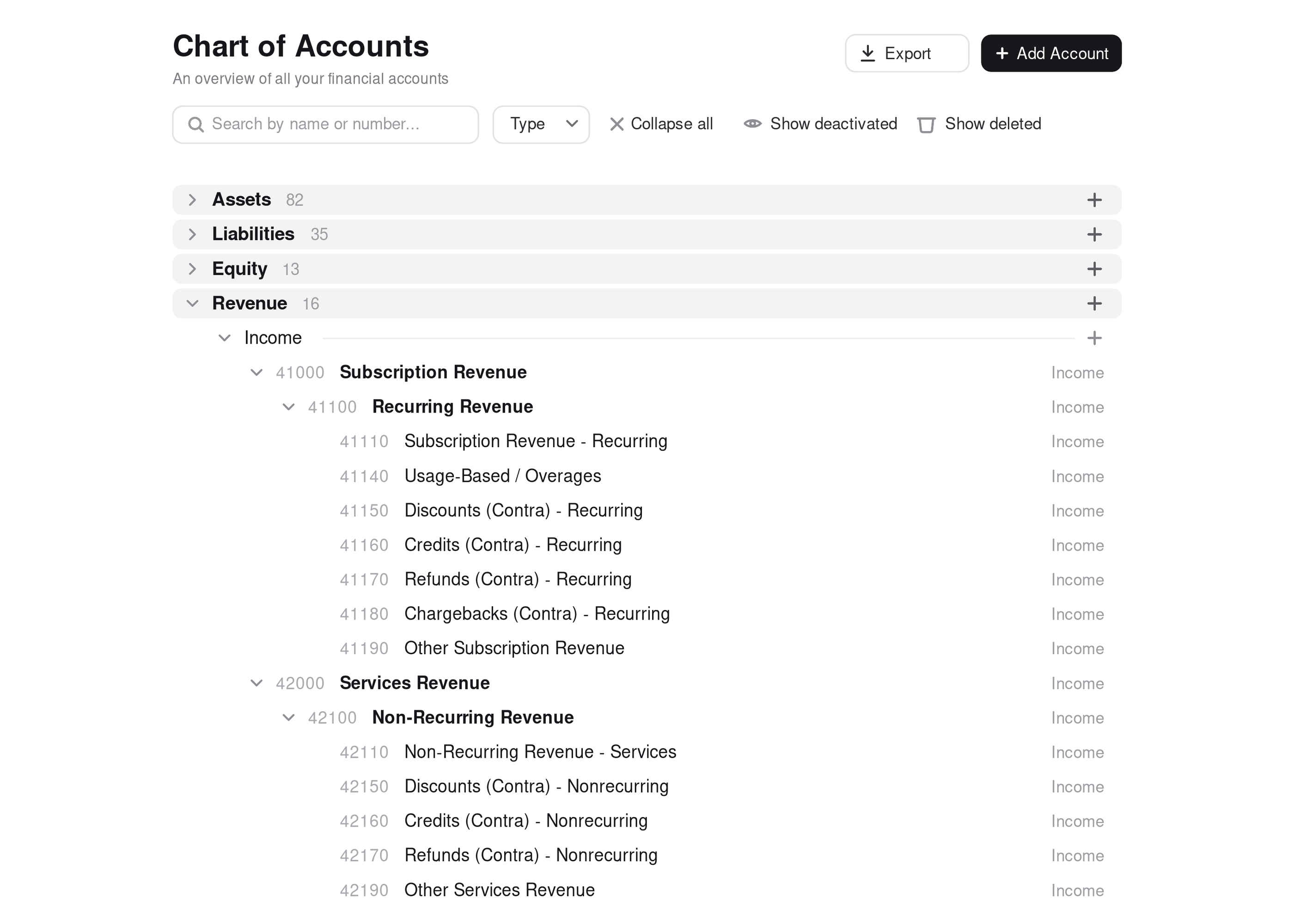
All transactions are ingested hourly from your connected sources. Same event in, same entry out, every time. Journal entries are auto-created based on the categorization rules you set during the onboarding process
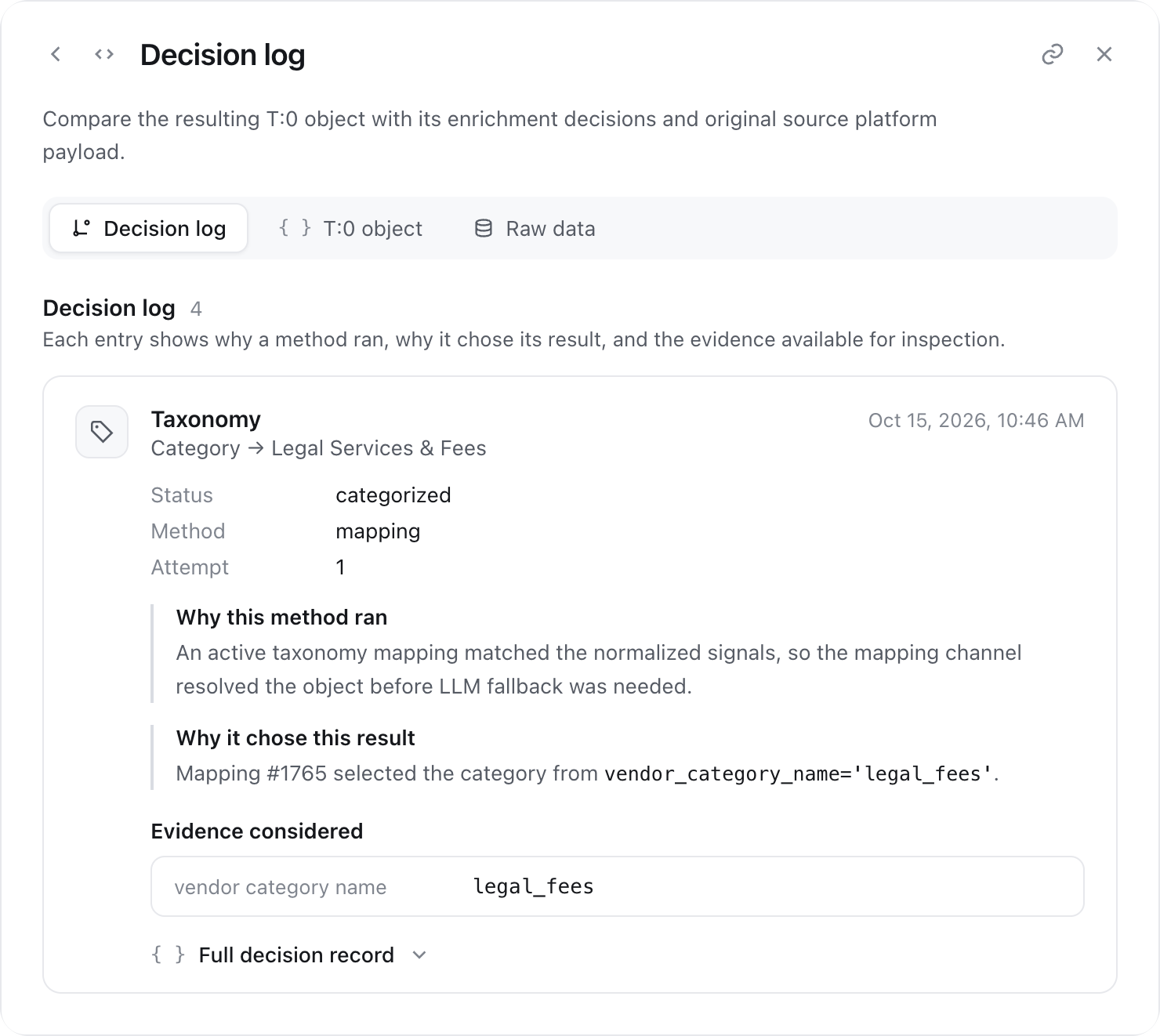
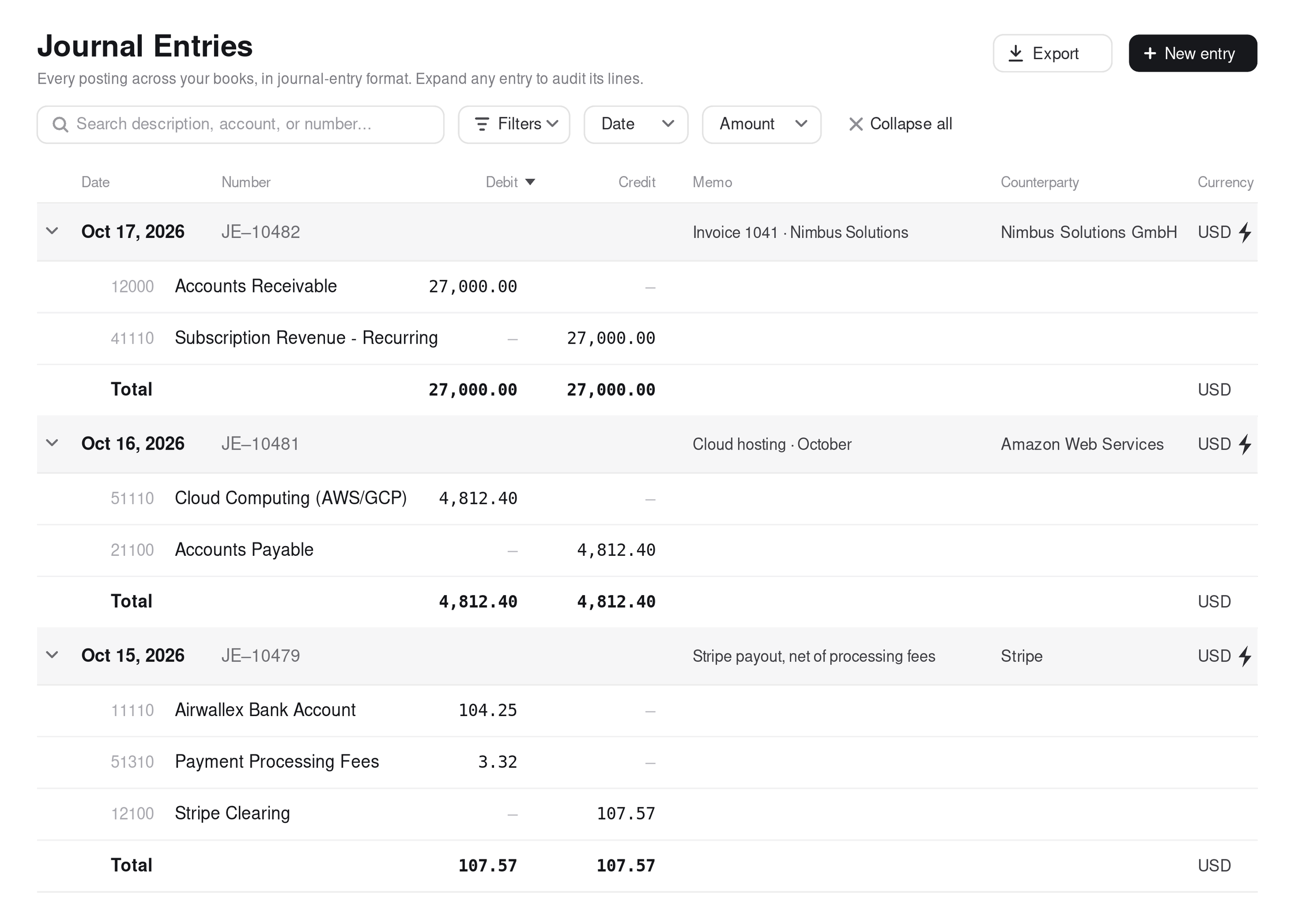
Open any entry and see the lines behind it. Nothing is ever overwritten, so when something gets corrected you can see what changed and when, instead of finding a number that quietly moved.
: How T:0 is different
Open any general ledger and you find rows: date, account, debit, credit. Each row is the end of a story and the story itself lives somewhere else. In T:0, you can start from any number and walk it back to the event that created it.
Change how an event should be treated and every downstream entry updates, with the original history intact. A new pricing model or a second product does not require a migration or a cleanup project.
T:0’s AI can investigate and propose across all of your books. But it will only post journal entries based on the underlying rules, it is built to never guess. If the AI doesn’t know the answer, it will ask a human.
: FAq
T:0 builds your statements from the ledger that records every transaction, so they are complete whenever you open them:
A general ledger is the central record of every financial transaction a company makes, organised into accounts. It is the source data every financial statement is produced from.
General ledger accounting software maintains that central record and posts journal entries to it. T:0 generates the chart of accounts and posting rules from a profile of your business, applies those deterministically to journal entries, and keeps the event history the entries were derived from.
A venture-backed startup needs a general ledger software that supports that reflects how it actually earns and spends, rules that stay consistent as the business changes, and an audit trail that holds up in diligence. Most general ledger solutions are built for established companies and assume a finance team you have not hired yet. T:0 was built for seed to Series A companies in SaaS, AI, fintech, and developer tools.
T:0 starts at $199 per month, which includes the ledger, your custom chart of accounts, automated bookkeeping, and financial statements. Managed plans that add a dedicated CPA start at $599 per month. See pricing for full details.
Yes. T:0 is the general ledger itself, not a layer on top of another companies GL. When you connect your accounts, T:0 imports your transaction history, so prior periods stay intact. Pilot and Fondo automate bookkeeping inside QuickBooks Online; T:0 replaces it.
No. T:0 generates it from your business profile, and our in-house CPAs review and finalise it before anything posts. On managed plans that review is included; on the platform plan it happens in a free onboarding session with the same team.
During onboarding, T:0’s AI pulls details from the web to understand your industry and revenue model, then asks about what it cannot infer. From that profile T:0 generates a chart of accounts to match, so revenue is split the way you earn it and costs the way you spend.
Yes. The generated structure is a starting point, not a lock. You can add accounts, deactivate ones you do not use, and see deactivated and deleted accounts at any time.
Yes. Every entry traces back to the rule that produced it, and all of those rules are visible in T:0. You can see what was recorded, which rule recorded it, and the evidence the rule considered.
: Explore the platform
From the first transaction to the board deck.

Build any report by asking for it. Burn, runway, flux, and board reporting from live books.

ASC 606 applied as a rule, with deferred revenue schedules that reconcile to the contracts behind them.

Transactions categorized, reconciled, and matched as they land, every day, across every account.
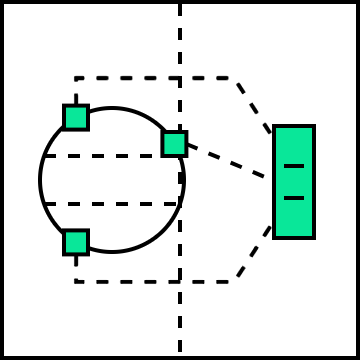
Every subsidiary and currency in one ledger, with intercompany eliminated automatically and a consolidated close in days.


